The Ajmer Bungalow is in the Civil Lines area of Ajmer City.
Built in 1908, it is a typical British colonial bungalow, standing in its own grounds. With a varied roof line which hints at cool, high-ceilinged interiors protected from the hot desert air by thick walls and deep, shaded verandas.... Home to the great grandchildren of Shankar Lal Capoor, who came to Ajmer from Agra over 150 years ago, the Ajmer Bungalow, from the outside, looks exactly as it did when it was built. The interiors have been brought up to date with modern bathrooms and air conditioning and are furnished with our own furniture, books and paintings. | The house is approached across a large front lawn, the scene of many merry gatherings of family and friends. The smaller, more private, tranquil garden at the back is a birdwatcher’s paradise or the quiet reader’s haven. Conveniently close to the bus stop and station, ten minutes drive from the Old Bazaar and major sights of interest.     
---------
Peora Dak Bungalow, Almora                         ----------- |




 The
‘Mercantile Marine’ was the earlier name for the Merchant Navy – the
collective title for all the commercial shipping (i.e. non-military)
both the UK registered ships and their crews. During the First World
War, the loss of British commercial shipping to German U-boats was so
great (around 14,600 merchant seafarers lost their lives and 7,759,090
tons of ships were sunk) that King George V granted the title ‘Merchant Navy’ to the service in honour of their sacrifice. All British registered vessels fly the Red Ensign and have done so since 1674.
 colours are directly connected with the Peninsular flags: the white and blue represent the Portuguese flag at the time in 1837, in combination with the yellow and red the Spanish flag.
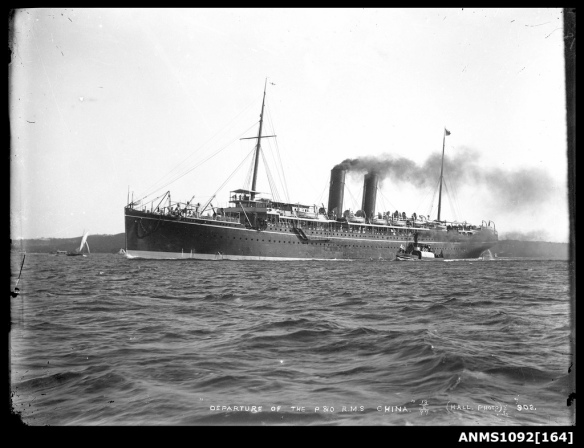
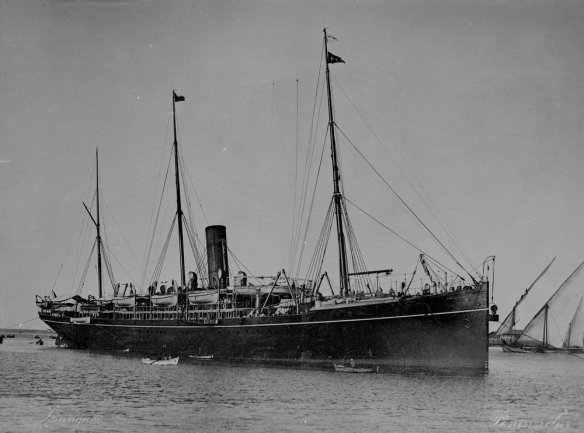
In 1837, the business won a contract from the Admiralty to deliver
mail to the Iberian Peninsula and in 1840 they acquired a contract to
deliver mail to Alexandria in Egypt. The present company, the Peninsular
and Oriental Steam Navigation Company, was incorporated in that year by
a Royal Charter. Mail contracts were the basis of P&O’s prosperity
until the Second World War, but the company also became a major
commercial shipping line and passenger liner operator. In 1914, it took
over the British India Steam Navigation Company (‘BI’), which
was then the largest British shipping line, owning 131 steamers. In
1918, it gained a controlling interest in the Orient Line,
its partner in the England- Australia mail route. Further acquisitions
followed and the fleet reached a peak of almost 500 ships in the
mid-1920s. In 1920, the company also established a bank, P&O Bank,
that it sold to Chartered Bank of India, Australia and
China (now Standard Chartered Bank) in 1927.




 GTG’s service record is
unclear when he ceased his role as instructor at the school but it
seems from the photo album that he returned to civilian life quite soon
after the war. He was married on 30 December 1918 at St.Thomas’s
Cathedral, Bombay to Annie Vera Chapman (known as ‘Vera’). Vera served
in the war as a V.A.D. nurse at Bevan Hospital, Sandgate, Kent so how they met each other is unclear.

 From 1919 GTG worked at the Russelpur indigo plantation and factory in North Bihar (I believe it is now called Rasulpur). And a year later, on 15th December 1919, GTG and Vera’s first child, Vaughan Reginald Gill (known as Reggie after his uncle RHG), was born.
 By this time it seems that GTG and family had moved to the Japaha sugar factory in Muzaffarpur District, Bihar,
which GTG describes was “HQ district of same name in province of Bihar
and Orissa, known as Tirhut, also called the garden of India”.


 The
last entry in GTG’s service record states “Resigned commission in
A.I.R.O. – 1st January, 1930”. There are then a number of photos of
GTG from 1930 onwards in the Bihar Light Horse (BLH) based at Muzaffarpur.


 In March 1916 GTG arrived by ship in Mesopotamia (now Iraq) serving with the 2/6th Gurkha Rifles. 2/6GR joined the 15th Indian Division which was formed in Mesopotamia in 1916 as part of the MEF – Mesopotamia Expeditionary Force. A brief explanation of the Mesopotamia campaign can be found here: Mesopotamia campaign – The National Archives


 This
photo shows a Sikh regiment on board the SS Coconada in the Persian
Gulf. The horses and mules are in boxes on the port side of the ship
and the men are collecting food on the starboard.
 Major
R. Maurice Searle Barton, T.D., “born in Frampton, Gloucestershire
4.8.1892; Second Lieutenant Indian Army Reserve of Officers, 18.12.1914;
attached 1st Battalion 6th Gurkha Rifles, 9.9.1915; Lieutenant
18.12.1915; served in Egypt and Mesopotamia during the Great War;
commanded “C” Company 2nd Battalion 6th Gurkha Rifles at Ramadi,
September 1917; Captain 18.12.1918; served with 1st Battalion 5th Gurkha
Rifles, 1918-1919; attached 2nd Battalion 11th Gurkha Rifles 1920;
retired 20.11.1922; Assistant Commandant, Mewar Bhil Corps and Assistant
Political Superintendent, Hilly Tracts, Mewar, 6.7.1926; re-engaged as
Staff Captain Royal Artillery (T.A.) for the Second War, 16.6.1939;
posted to Mountain Artillery Training Centre, Amballa, India; retired
Honorary Major, 2.11.1947″ (taken from http://www.abebooks.co.uk/servlet/BookDetailsPL?bi=6459279443&searchurl=an%3Dgurkhas)